
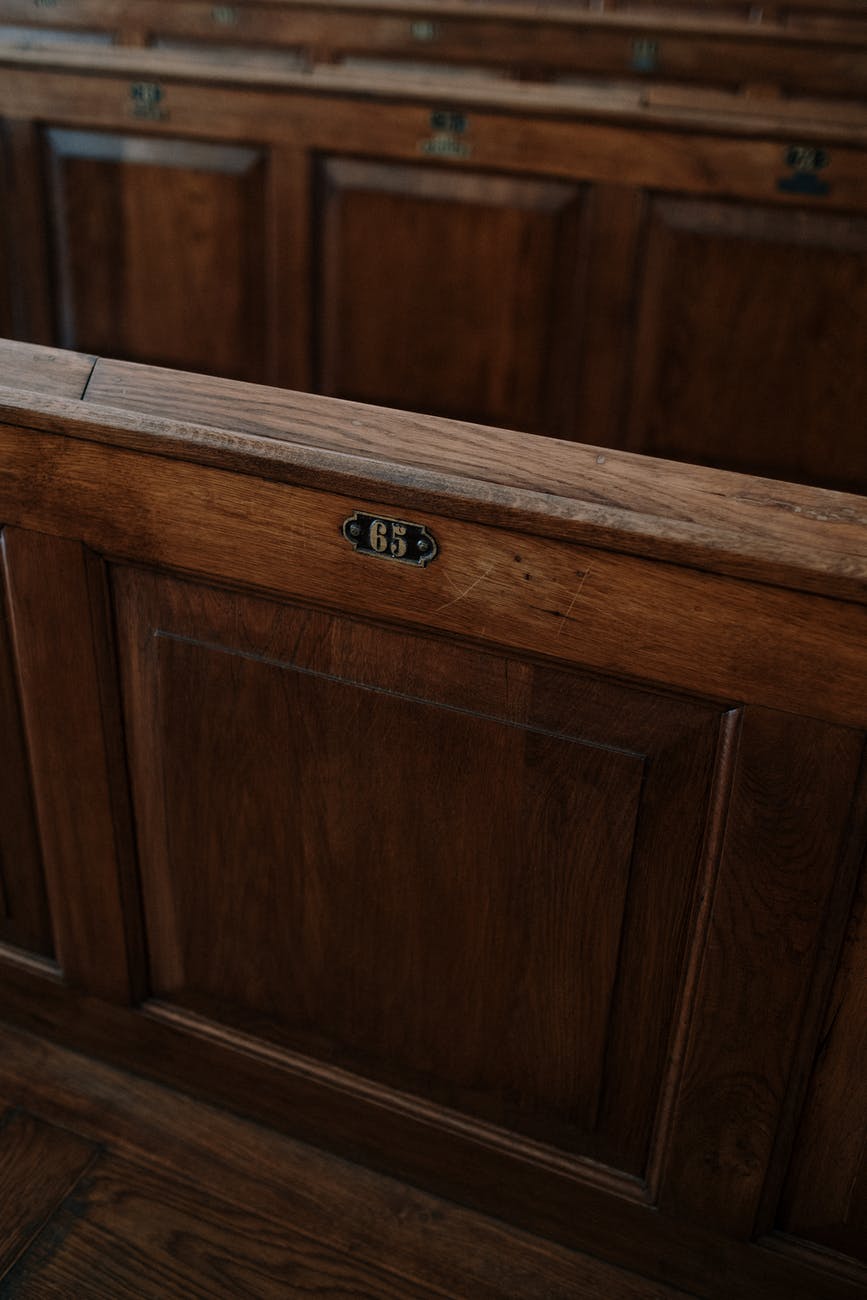
Mahogany Pt.1
It all started wh- no, that’s too contrite – the door is still a jar – stop it. Get a hold of yourself. It’s hard to really explain what’s going on, I don’t quite understand it myself. Stuck here, claustrophobic, scared, and I can’t do anything. But the door is still here and it’s watching.
It took a while to find out where it came from. The wood is mahogany, called Swietenia Humilis, and was harvested in Honduras to build a slave ship during the 1800s, 1802 to be specific. A strange choice, since mahogany isn’t the best choice for ship building. But I guess when you’re willing to trade human beings, the quality of the ship doesn’t much matter.
The first of many strange oddities, was the white shapes, described extensively by the crew that sailed The Cora. St. Elmo’s fire logical minds called it. They probably wouldn’t have said that if they knew what I now know. The white shapes had a very specific modus operandi: they would glide quietly, almost death-like, around the deck of the ship. Wherever they went, the wood would creak, and turn black, stained with what one would assume to be blood. Then, they would suddenly disappear as quickly as they appeared, always culminating in a shriek, crackly and decaying.
That’s when things became interesting. I say that in irony of course, since fate has ordained that our paths cross. It seems that The Cora had a string of particularly bad luck after the white shapes arrived. First, the ship came afoul of rocks, near the coast of Spain. The breach in the hull too much to bear, it flooded, with all slaves, taskmasters, sailors and captain dead. 317 souls all told.
The ship at th – so many soles delicious – I said stop it. Let me just take a breath.
Ok. The ship at the time was considered a valuable commodity, large as it was, and being so close to the shore it was ripe for repair and return to its gruesome task. Haunted, they called it, but when have ghosts ever come in the way of profits? The white shapes, now banished to the sea, were replaced by an altogether much worse . . . thing. Unlike the white shapes, The Menace could not be seen, but rather, it could only be felt. An entity, looming over the shoulder. A gust of wind when the air is calm. That unrelenting feeling of being watched.
No, it isn’t watching. It’s looking, inside.
After the first few years, no crew wanted to come near it. Even though the heart of a slave trader is stone cold, The Menace made that stone shiver. Undaunted, the ‘authorities’ at the time did not want to waste a perfectly good ship, and it was bought and given to the navy, figuring that a highly trained crew would not fall prey to such a lowly emotion as fear. They were wrong.
The Menace continued to haunt those poor fellows who were assigned to The Cora. For example, one time the first officer, a man by the name of Luis Carmen, was found hanging from the beams of the lower decks, his wrists slit. Written on the floor below him in blood was his eulogy: Oh mother, why is it watching me?
As bad as that seems, the second in its string of bad luck, was during a short but deadly scuffle in the Mediterranean Sea. The Cora, engaged in battle, failed to see the smaller ship approaching from its rear. Blindsided, the ship was overrun, and all the crew was murdered in cold blood. Stabbed, beheaded and mutilated, the ship was swimming in blood. 173 died on that occasion.
I think I need to take a short break here. Sometimes it’s hard to keep the flood of bad thoughts away. I don’t even know why I am even (saying) any of this. It’s not like it can be stopped now. It’s killed too much.
Anyway, it has now been 11 years since the wood was first harvest, and the boat constructed, so the year is 1813. The boat having changed ownership a third time, after being captured from the Spanish Navy, came into its third bit of bad luck. Repurposed as a medical ship, The Cora acted as the doctor of the seas, transporting doctors and their sick from battlefields. Not very successfully though.
First, there was a touch of the black plague, 209 dead. Then, a navigational error, the ship was lost at sea, 145 dead from starvation. The ship was found, and then immediately hit by lightning. Twice. A skeleton crew of 38 dead. While undergoing repairs, the dry dock flooded, killing 56 engineers. During a resupply mission, some medicines and chemicals being transported reacted together, releasing an odorless and poisonous gas. 128 dead.
And that’s not even counting the spate of suicides. Slit wrists, suffocations, hangings, drownings and other veritable cornucopia of the grim. One could describe it as “a fucking bloodbath”.
All in all, it took 29 years and 731 lives before somebody realized that there was something seriously wrong with this ship. That’s when it was taken apart, in the vein hope that whatever this “thing” was would stop. Unfortunately, they didn’t burn it like they should have they should have burned when they had chance. Greed and money prevailed, and the wood was reused to build furniture.
Now, I’m not exactly sure what happened to most of the wood, as you can imagine, a ship has a lot of wood in it. What I do know of, is a large dining table that was made. A beautiful piece of workmanship. Long, dark, the detailing was perfect, made by artisans in-fact, if you listened to those who boasted about it. 5 chairs on each side, with one chair at the head of the table for the master of the house.
It was sold in 1842, which you might notice as a century before WWII, to a wealthy Englishman by the name of Sir William Henry, at a cost of 83 sovereigns. A quiet extra-ordinary amount at the time. The table was transferred to Sir Henry’s estate in the outskirts of London, placed in a majestic dining room with high ceilings and 17th century artwork. At the opposite end of where the master sat, there were large gothic-style windows, overlooking green fields. Quite an enjoyable sight.
Or at least, Sir Henry would have enjoyed it, if he wasn’t found the next day, his head crushed under the considerable weight of the overturned table, clutching tightly at the St Benedict Medal around his neck. It seems, this was a fight Saint Benedict couldn’t handle ha ha. Of course, the police could never figure out why the table fell over in the first place. If only they knew what I know.
The grieving widow, unable to stomach having the table that murdered her husband around, donated the table to a hospital. One of the finest hospitals in-fact, where men of great minds would come and pioneer the treatment of the human body. It was placed in the hospital’s small but significant library, where doctors could come and research old cases, new treatments, and even just spend a few hours there, unwinding and relaxing while reading a book.
It was during one of these times, I’m sure, that it first spoke to a certain Dr. Fortescue. He was known at the time for his pioneering work in the brain, what we would now call neurosurgery. His career came abruptly to an end when during surgery, he seemed to have lost his mind, and started slashing and cutting into the brain he was operating on. When questioned by the police, the only thing he would say is “I had to cut it out”. He repeated that, during his deposition, and when he was charged with murder.
Around the same time, the staff at the hospital began complaining of the library. I’m sorry, I have to stop here again. I can feel it slowly creeping into my brain. It’s hard to ignore it. I hate the fact that it’s still watching me. It’s slowly taking over me. I won’t let you go.
Ok, I think . . I think I’ve staved it off for now.
As I was saying, the hospital library became weird, at least weirder than a hospital library already is. It began smelling, interestingly enough, of seawater and decomposition. No matter how many windows were opened, the smell wouldn’t go away. One day, while a nurse was retrieving a book, she fell pushed over the rail on the upper landing. She died instantly from internal decapitation.
Apparitions were ripe. It had over a thousand souls to choose from after all. Sailors, doctors, patients, slaves, and even one landed gentry.
The hospital administration, afraid, tried everything, even exorcism. But the oddities continued, and even worse, deaths delicious became more frequent. As most of you will realize, this is quite a problem for a hospital. Finally, the administration did the only thing it could do: Boarded up the library.
And so now we come to a relatively peaceful decade, at least as far as *it* goes. With no bodies to influence or come close to, one would hope that it maybe starved to death, or died out due to inactivity. Unfortunately, it seems that the time it had alone only made it stronger.
For you see, in 1853, a fire in the boiler room of the hospital spread, and burned down the hospital, including all 157 souls inside. The library was also consumed by this fire, but oddly enough, the dining table, with its stout chairs, remained untouched and pristine. Found in the middle of the rubble, some considered it a miracle, other’s considered it an omen. I guess we all know by this point who was right.
After that, the table changed hands several times. First it was acquired by a middle-income couple, who both met their end in a murder-suicide. The husband, in a fit of insanity, accused his wife of having an affair, and with a knife in his hand, stabbed her several times. Realizing what he had done, he put her body on the table, lay next to her, and slit his throat. Quite a price to pay for owning some wood.
Then, the table was purchased by an older gentlemen. He was found one day, head in his morning soup, drowned. The next one, murdered by his servant, with a piano wire of all things. The next one slipped one morning while carrying food to the table and twisted her neck. The one after that, medical overdose. On it went, death after death, until the final owner of the table, and that one is a particularly gruesome one.
While hosting a party, the owner’s bloodhounds went mad and attacked all the guests and the house staff. They tried to fight them off valiantly, but their bodies were all found the next day, the dogs gnawing at them, enjoying their meal. Consumed by some ungodly power, the bloodhounds all had to be shot, as any time someone came near, they were attacked.
After that, the table goes missing. For decades I couldn’t find any information, until the trail started again, with a newspaper clipping in 1889. Apparently, the previous owner had died from a snake bite, and his belongings were all auctioned off to a set of craftsmen. The table itself going to a Mr. Roger of Roger’s Carpentry. So far, it seems that Mr. Roger got off scot free, maybe because he gave *it* a new form. He took the table, and cannibalized it for parts to create a wardrobe.
A massive thing, standing tall. So big in fact, that it could hold several men inside. I know, I can see it in front of me. Staring. Looking at me. With its double doors, I can imagine that it might seem quite welcoming to the clueless fool who would own it. And now, with the door ajar, watching me. I sense your fear. The wardrobe was purchased by a German baron, and gifted it to the Crown Prince of what was then known as Austria-Hungary. Sometimes, these noblemen, for all their wealth, are quite cheap.
 Albert Bassili